tiistai 9. joulukuuta 2014

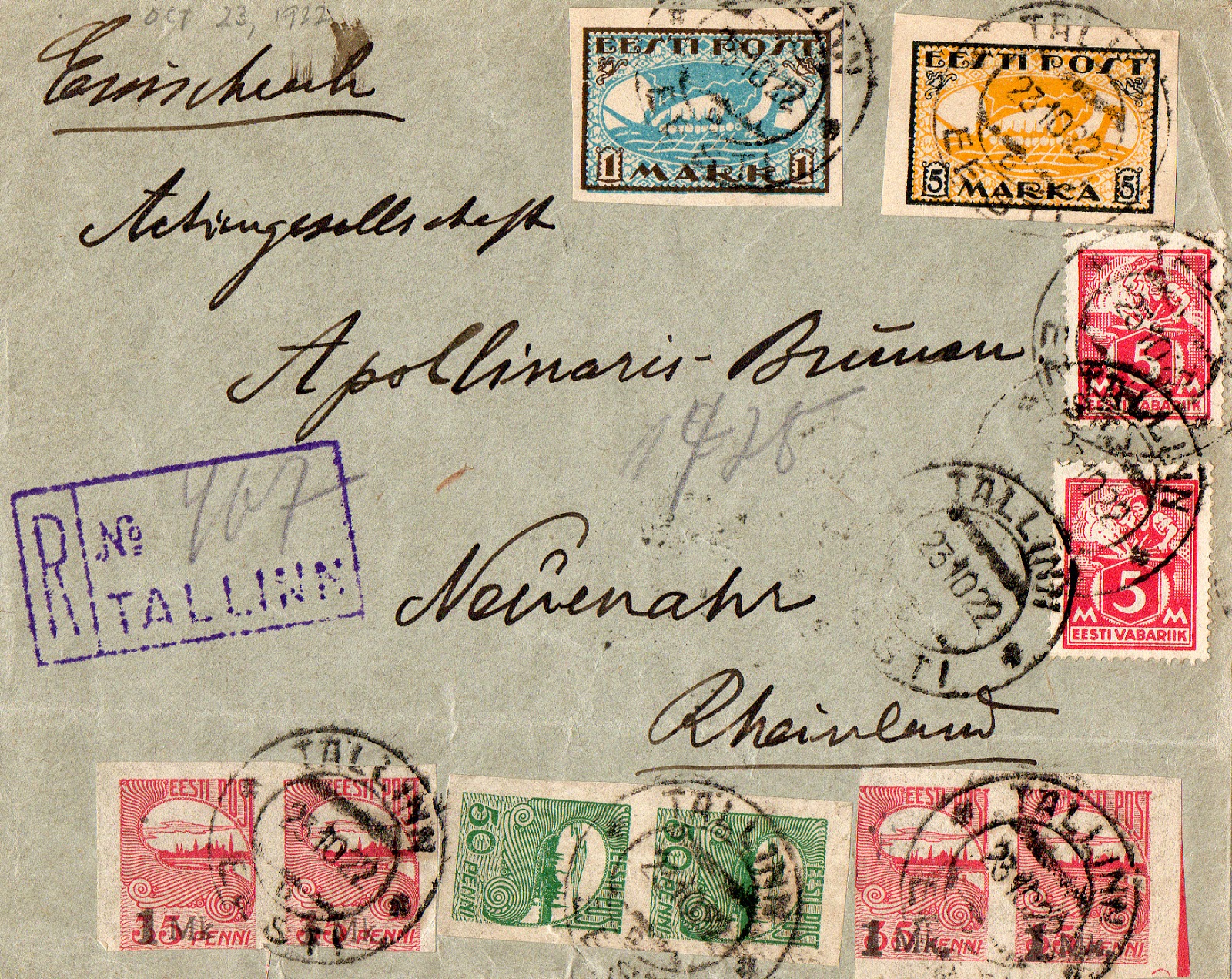
Postkastist välja võetud


1. Postkastist Väljavõetud/Ametnik, 22/X + initials

  Registration 10 mk, 20g.letter = 10 mk = alltogether 20 mk, 1 mk extra

Huomio, huomio: tämä kirjoitus perustuu arveluihin, ei faktoihin.

Jossain vaiheessa jokainen Eestin vanhojen kuorien keräilijä törmää leimoihin, joissa lukee "Postkastist välja võetud" eli "otettu ulos postilaatikosta". Tämän artikkelin numero 1 ja 2 ovat sellaisia kuoria. Huomioikaa heti, että nämä ovat toimenpideleimoja. Kirjeet eivät välttämättä ole postilaatikosta ulos otettuja vaan ehkä firman konttorissa postiljoonille ojennettuina. Perustelu leiman käytölle näyttää olleen kirjeiden tarvitsema lisäkäsittely. Näissä kahdessa tapauksessa yhteinen piirre on kirjaus. Kumpaankin kirjeeseen on kirjoitettu lähettäjän käsialalla sana "kirjataan" eikä leimalla lyötynä. Ainakin toinen näistä kirjeistä on lähtenyt yrityksestä, joka sijaitsi melko kaukana Narvan keskustasta. On luonnollista, että tehtaan kyljessä ei ollut postikonttoria, jossa kirjaus olisi voitu tehdä. Molemmissa tapauksissa kirjaus on tietenkin tehty postikonttorin virallisilla leimoilla. Vielä yksi yhteinen piirre näille kahdelle kirjeelle: molemmissa on ylifrankeeraus. Ilmeisesti lähettäjä on varustanut kirjeet harkitsemallaan tarpeellisella määrällä postimerkkejä tietämättä tarkkaa postituksen loppusummaa.

Please, observe: this writing is based on guess-work. Real facts are missing.

At some point, every collector of Estonian old stamps will become familiar with labels which say "Postkastist välja võetud" or "taken out of the mailbox." In this article, the number 1 and 2 are those kinds of envelopes. Please, note, these are “action taken” markings. Letters are not necessarily taken out of the mailbox but perhaps handed to the postman. Reasoning for the stamping appears to have been that the letters needed further processing. In these two cases, the common feature has been registration. Each of the letters is written in the sender's handwriting with word "inschreiben", registered. At least one of these letters has left the company which was located quite far from the center of Narva. It is natural that the factory had not been on the side of post offices where the normal entry could have been done. In both cases, the entry is made by the postal officer on duty. The second common feature is: those two letters are both over-franked. Apparently, the sender has provided letters for the necessary sum for mailing without knowing the exact final amount.
 
2. Postkastist välja võetud/Ametnik, + initials
 Registration 20 mk, 41-60g. letter = 44 mk = alltogether 64 mk, 6 mk extra

 3. Postkastist parandatud aadressiga/from mailbox corrected address


Tämän kortin toimenpiteet on helppo ymmärtää. Oli löydettävä uusi osoite.

4. Ei olnud kodus/was not at home/ ei ollut kotona
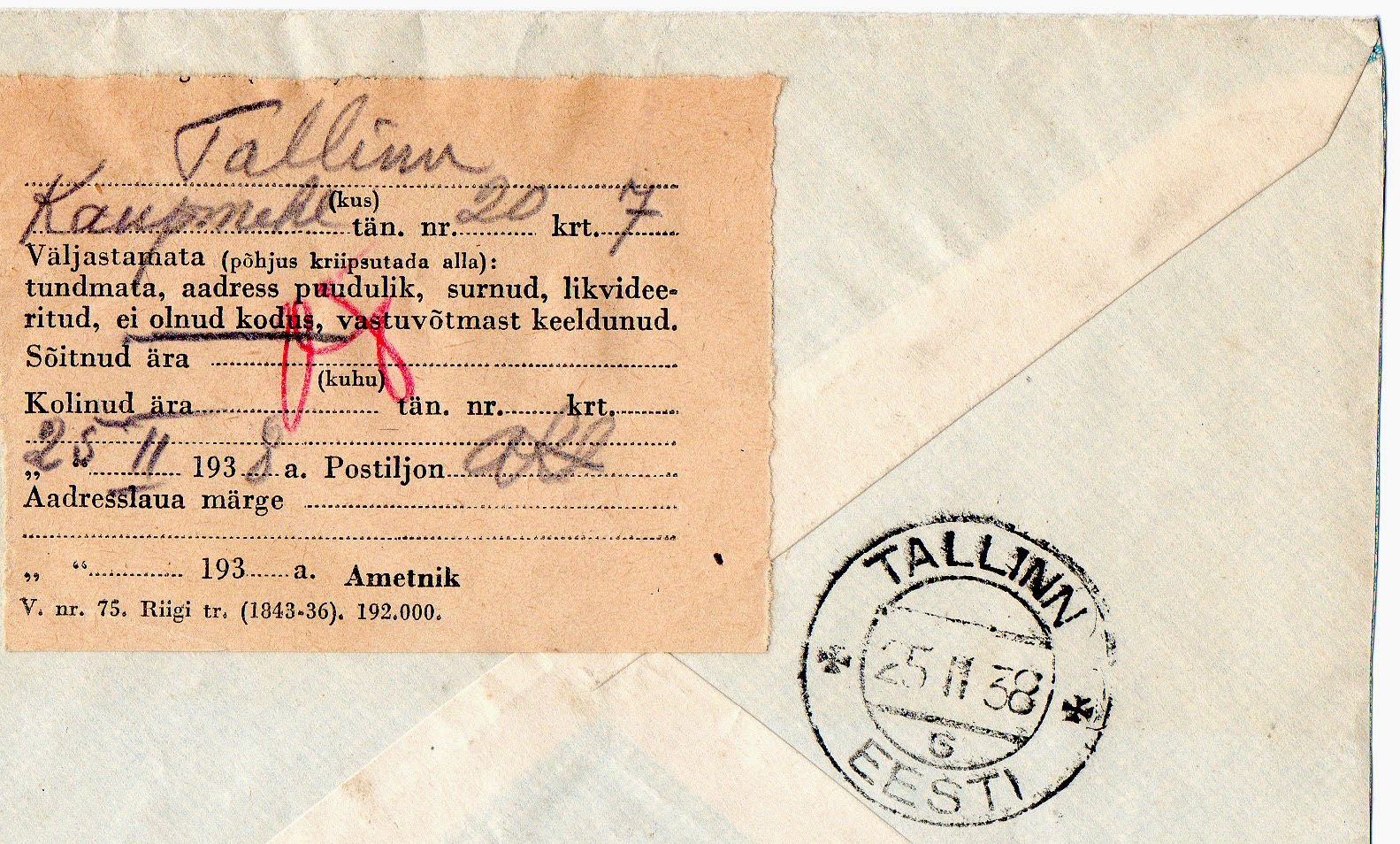


Registration 0,10 kr, inland letter 20g. 0,10 kr = 0,20 kr.

Lisää tietoa näistä leimoista: Käsikirja, s.389-399 


Taken out from mailbox/ otettu ulos postilaatikosta

torstai 4. joulukuuta 2014

Harvinainen kokonaisuus


Käsikirja sanoo, että 2½ mk:n hammastamaton kutoja yksin lähetyksellä on harvinainen tapaus. Merkki julkaistiin 10. huhtikuuta, 1922 ja sen painos oli 130 000 kpl. Kotimaan kortin postitaksa 2½ mk oli voimassa 10.4.1921-31.12.1923, joten tuolta ajanjaksolta on mahdollisuus löytää näitä aarteita.

Riittämätön postimaksu


Tämä postikortti on lähetetty Rakkesta 6 XII 1924 ja se on saapunut Tarttoon 7 XII 24. Jostain syystä lähettäjä ei ole maksanut postimaksua (tässä tapauksessa 3 mk) ja niin lähettävä virkailija on lyönyt korttiin "Postage due" T-leiman sakkojen kera. Vastaanottaja on siis joutunut pulittamaan kortista 6 mk.

sõja kontroll-punkt, Pärnu

The registered letter below has been sent 26.9.1919 from Pärnu to Hamburg in Germany: foreign registration 0,50 mk + letter (15 g.) 0,50 mk and total of 1 mk is correct. The letter arrived in Hamburg 8.10.1919.  
 
Please, observe the Pärnu censorship triangle-stamping S.K. Pä (sõja kontroll-punkt, Pärnu). The military control point of Pärnu was opened on January 27, 1919. As we all clearly remember, the Estonian War of Independence took place during November 28, 1918 - February 2, 1920. (Handbook page 739)


Oma väljaanne


This envelope to USA is cancelled 4 IV 1936. The "OMA VÄLJAANNE" stamping makes this object quite interesting. Oma väljaanne means same as   “raamatud” tai “oma kirjastus”.This statement allowed to send Printed papers with reduced rates - 50 %. The above source: Martti Räikkönen, Finland
 

1.1.1935-31.3.1936:
Foreign printed paper postage  fee (51-100 g) was 10 senti. 
Reduced - 50% = 5 senti

Alennettu painotuotetaksa - 50 %
Esa Mattila: Tämä asetus tuli voimaan 15.12.1925. Asetuksen piiriin kuuluivat sanoma- ja aikakauslehdet, nidotut esitteet, nuotit, kartat, jne. Luonteenomainen piirre lähetykselle oli tämä: julkaisija on lähetyksen lähettäjä ja että lähetyksessä ei saanut olla mitään mainokseen luokiteltavaa. Käytännössä se tarkoitti sitä, että lähettäjän piti olla esimerkiksi kirjapaino, joka lähetti massoittain kyseisiä lähetyksiä; pystyttiin siis neuvottelemaan ”tukkusopimus” postin kanssa. Lähetyksessä piti lukea:  “raamatud” tai “oma kirjastus”.


Printed papers with reduced rates - 50 %
Esa Mattila: This law came into force on December 15, 1925. To the rebated printed papers were included newspapers, magazines, binded brochures, music books, maps, etc. Printed papers with reduced rates had two common features: they did not include advertisements and the publisher was the sender. The postage was half of that of a normal printed paper. The article was marked: “raamatud” or “oma kirjastus”.